
erp en software
Understand ERP in software with examples. Learn how ERP software works, its benefits in software engineering, and enterprise resource planning systems.
software engineerings
2/9/20264 min read
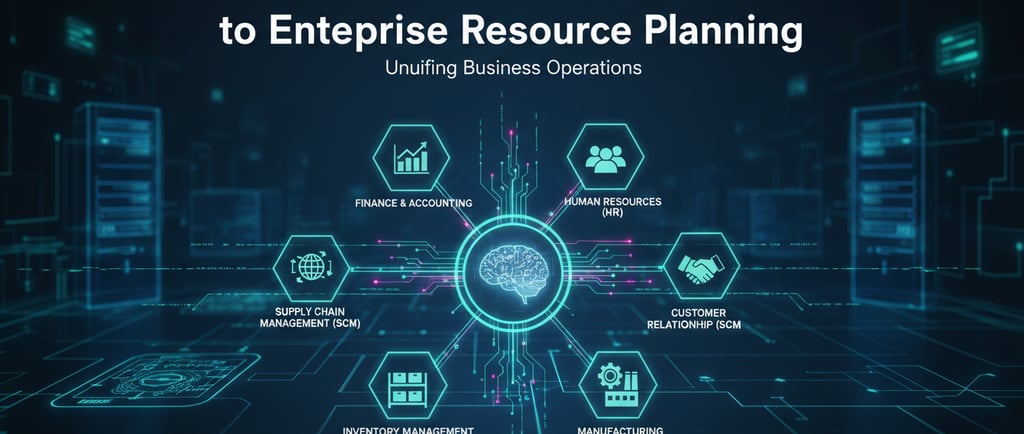
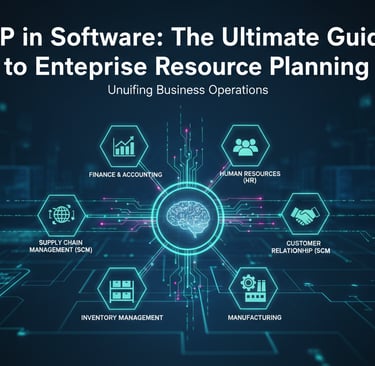
ERP in Software: The Ultimate Guide to Enterprise Resource Planning
In the modern digital landscape, businesses of all sizes are looking for ways to streamline their operations. One of the most critical tools for achieving this is ERP software. But what exactly is ERP in software, and why is it considered a cornerstone of software engineering and business management?
In this comprehensive guide, we will explore the intricacies of Enterprise Resource Planning (ERP), how it functions, and why it is an essential asset for digital transformation.
What is ERP in Software?
ERP in software stands for Enterprise Resource Planning. At its core, ERP is a type of business management software that allows an organization to use a system of integrated applications to manage the business and automate many back-office functions related to technology, services, and human resources.
In the world of software engineering, an ERP system is seen as a centralized database that collects inputs from various departments—such as accounting, manufacturing, supply chain, sales, marketing, and human resources—to provide a "single source of truth." Instead of each department having its own siloed software, ERP software integrates these functions into one unified platform.
How ERP Software Works
The magic of ERP software lies in its integration. Most traditional software applications are designed to handle one specific task. However, an ERP system works by using a common data definition and a single shared database.
Data Centralization: Information entered by one department (e.g., Sales) is immediately available to others (e.g., Warehouse or Finance).
Process Automation: ERP systems automate repetitive business tasks, such as generating invoices, updating inventory levels after a sale, and processing payroll.
Real-Time Analytics: Because all data is in one place, the software provides real-time dashboards and reports, allowing management to make data-driven decisions instantly.
Key Features of ERP Software Systems
Modern ERP software is modular, meaning businesses can choose the features they need. Common modules include:
Finance & Accounting: Manages the general ledger, accounts payable/receivable, and financial reporting.
Human Resources (HR): Tracks employee records, payroll, recruitment, and performance management.
Supply Chain Management (SCM): Monitors the movement of goods from suppliers to customers.
Inventory Management: Tracks stock levels, orders, and deliveries to prevent overstocking or stockouts.
Customer Relationship Management (CRM): Manages interactions with current and potential customers.
Manufacturing: Helps in planning production, sourcing raw materials, and managing the shop floor.
Types of ERP Software
When engaging in software development for an enterprise, one must choose the right deployment model. There are three primary types:
1. On-Premise ERP
This software is installed locally on a company's own computers and servers. It offers the highest level of control and security but requires a significant upfront investment in hardware and a dedicated IT team for maintenance.
2. Cloud-Based ERP (SaaS)
Managed by the software provider in the cloud, this is the most popular choice for modern software engineering projects. It offers lower upfront costs, easy scalability, and accessibility from any location with an internet connection.
3. Hybrid ERP
A combination of on-premise and cloud solutions. This allows companies to keep sensitive data on-site while utilizing the cloud for less critical business functions.
Benefits of ERP in Software Development and Engineering
For those in the field of software development, implementing an ERP system offers several technical and operational advantages:
Standardization: ERP provides a standardized platform, making it easier for software engineering teams to maintain and update systems across the entire organization.
Improved Collaboration: By breaking down data silos, developers can build cross-departmental tools that improve overall productivity.
Data Integrity: With a single database, the risk of data duplication and errors is significantly reduced.
Scalability: Well-engineered ERP systems are designed to grow with the business, allowing for the easy addition of new users and modules.
Challenges and Limitations of ERP Systems
Despite the benefits, implementing ERP software is a complex undertaking:
High Implementation Costs: Especially for on-premise systems, the initial cost can be a barrier for smaller businesses.
Complexity: The massive scale of these systems means they require significant training for employees to use them effectively.
Data Migration Issues: Moving data from old, legacy systems into a new ERP platform can be a technical headache for software engineering teams.
Customization Risks: Over-customizing an ERP can make it difficult to upgrade the software in the future.
Popular ERP Software Examples
Several major players dominate the business management software market:
SAP S/4HANA: The industry leader for large-scale global enterprises.
Oracle NetSuite: A highly popular cloud-based ERP favored by mid-sized businesses.
Microsoft Dynamics 365: Known for its seamless integration with other Microsoft products.
Odoo: An open-source ERP that is highly customizable for unique software development needs.
Sage Intacct: A top choice for finance-focused ERP requirements.
ERP Software vs. Traditional Business Software
Feature
Traditional Software
ERP Software
Integration
Siloed (Separate apps for each task)
Fully Integrated (One platform)
Data Flow
Manual transfer between apps
Automated, real-time data sharing
Database
Multiple, disconnected databases
Single, centralized database
Cost
Lower initial cost, high maintenance
Higher initial cost, high ROI
Reporting
Difficult to consolidate data
Instant, comprehensive reporting
Conclusion: The Importance of ERP in Modern Software Engineering
In the era of digital transformation, ERP in software is no longer just a luxury—it is a necessity. By integrating core business processes into a single, cohesive system, organizations can achieve unprecedented levels of efficiency and insight.
For those in software engineering and software development, understanding the architecture and implementation of Enterprise Resource Planning systems is vital. As businesses continue to move toward data-driven models, the role of ERP will only grow, serving as the digital backbone that supports innovation, scalability, and long-term success.
Stay tuned to softwareengineerings.com for more insights into the latest trends in software development and enterprise technology.